Source Diesel Agricultural Tricycle for Mining, Cargo, and Farming
Explore 30 Diesel Agricultural Tricycle models designed for mining, cargo transport, and farming applications. Compare specifications including horsepower, load capacity, and tire options to find the right vehicle for your operational needs.
Key considerations
Products List


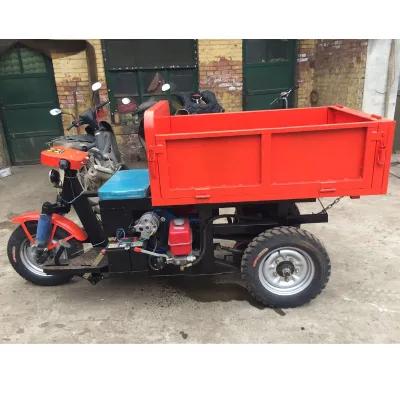
China Specializes in Manufacturing Agricultural Adult Diesel Freight Tricycles
$2300.00 - $2400.00
MOQ: 1 Sets


High Quality Agricultural Diesel Fuel Tricycles for Household Agricultural
$999.00 - $2999.00
MOQ: 1 Pieces


Three Wheeled Tricycle Motorcycle Cargo Agricultural Tricycle 150cc Motorized Tricycle
$1100.00 - $1200.00
MOQ: 100 Sets




Comprehensive Sourcing Guide
Diesel Agricultural Tricycle Sourcing Guide
Sourcing diesel agricultural tricycles requires a careful balance between mechanical robustness and regulatory compliance, particularly when navigating the complex landscape of off-road and light-duty cargo transport. These vehicles, often categorized under mining dump trucks or specialized cargo trikes, serve as critical assets in environments where larger trucks cannot maneuver but where standard motorcycles lack sufficient payload capacity. Buyers must recognize that while the core concept remains consistent—a three-wheeled, diesel-powered utility vehicle—the specific configurations vary significantly based on regional regulations and intended terrain. The observed market signals indicate a wide range of capabilities, from basic open-body cargo transport to specialized underground mining applications, necessitating a rigorous verification process before committing to any purchase order.
The procurement strategy for these vehicles hinges on understanding the divergence between consumer-grade trikes and industrial-grade mining equipment. While both may share a diesel powertrain and three-wheel configuration, their structural integrity, braking systems, and emission standards differ drastically. Buyers should approach this category not as a single product line but as a spectrum of specialized machinery. The presence of certifications such as EPA, DOT, and CCC in the market data suggests that some units are designed for road-legal or regulated industrial use, while others may be strictly for off-road or enclosed site operations. This distinction dictates the necessary documentation, insurance requirements, and operational safety protocols, making early clarification of the vehicle’s intended legal and physical environment essential for successful sourcing.
Product Scope and Observed Listing Signals
The current market landscape for diesel agricultural tricycles reveals a diverse array of specifications, with observed prices ranging from $600 to $3,900 USD and minimum order quantities (MOQs) varying between 1 and 100 units. This price dispersion reflects the significant differences in build quality, engine displacement, and intended application, ranging from simple agricultural transport to heavy-duty mining dump trucks. Buyers should note that the lower end of this spectrum likely corresponds to basic models with smaller engine displacements (111-150CC) and simpler mechanical steering, while higher-priced units may feature advanced hydraulic systems, larger payloads (up to 3-30 tons), and specialized mining certifications. Understanding this variance is crucial for aligning budget expectations with the actual performance requirements of the procurement project.
Listing signals also highlight a strong emphasis on customization and regional adaptation, with many suppliers offering options for left or right-hand drive, various cabin configurations, and specific tire designs such as radial mining tires. The observed product names, including "Volquete Subterranea" and "Mining Dump Truck," indicate that many of these vehicles are marketed toward specific international markets, particularly in Latin America and Southeast Asia. Buyers must verify whether the listed specifications, such as the 1040mm wheel distance or 75cm bucket height, are standard across all models or specific to certain variants. The presence of multiple horsepower ratings (18-35 HP) and transmission modes further underscores the need for precise specification matching, as a one-size-fits-all approach is rarely viable in this segment.
Technical Specifications to Verify
When evaluating technical specifications, the powertrain and transmission system are primary areas of focus, as they directly impact operational efficiency and maintenance costs. The observed data indicates a range of diesel engines with displacements between 111-150CC and horsepower outputs from 18 to 35 HP, with some listings claiming up to 400 HP for heavy-duty mining variants. Buyers must verify the actual engine brand, fuel efficiency, and compatibility with local fuel quality, as diesel engines in agricultural and mining contexts often face harsh operating conditions. Additionally, the transmission type, described as either automatic or a 4-main-belt gear mechanical steering system, requires careful assessment based on the terrain; mechanical steering may offer more durability in rough conditions, while automatic transmissions might provide easier operation in urban or semi-urban settings.
Structural and chassis specifications are equally critical, particularly for vehicles intended for heavy loads or steep inclines. The observed wheel distance of 1040mm and climbing capacity of up to 45 degrees suggest a design optimized for stability on uneven terrain, but buyers should verify the axle type, with options including 7-speed full-floating shifeng axles. The braking system, listed as hydraulic or oil/pneumatic, must be matched to the vehicle’s rated load, which ranges from 2-3 tons for standard models to 1-30 tons for mining trucks. Furthermore, the tire design, such as Chaoyang mining tires, and the suspension system, including 15-piece leaf springs, should be evaluated for their ability to withstand the specific wear and tear of the intended application, ensuring that the vehicle’s structural integrity is not compromised during heavy-duty operations.
Compliance and Safety Documentation
Compliance with local and international regulations is a non-negotiable aspect of sourcing diesel agricultural tricycles, especially when these vehicles are intended for road use or regulated industrial sites. The observed certifications, including EPA, DOT, CCC, CE, and ISO 9001, indicate that some manufacturers adhere to strict environmental and safety standards, but buyers must verify the validity and applicability of these certifications to their specific region. For instance, EPA certification is relevant for emissions control in the United States, while CCC is mandatory for products sold in China. Buyers should request original certification documents and cross-reference them with local regulatory bodies to ensure that the vehicle can be legally operated and insured in the destination country, avoiding potential legal liabilities and operational shutdowns.
Safety documentation extends beyond certifications to include detailed operational manuals, maintenance schedules, and safety feature descriptions. The observed features, such as hydraulic brakes, single shock absorbers, and anti-rust painting, contribute to the vehicle’s safety and longevity, but buyers should verify the effectiveness of these features through independent testing or user reviews. Additionally, the dumping system, described as a 3-stage hydraulic cylinder or front lifting style, must be inspected for reliability and safety mechanisms to prevent accidental dumping or structural failure. Buyers should also inquire about the availability of spare parts and technical support, as these are critical for maintaining compliance with safety standards over the vehicle’s lifecycle, ensuring that any wear or damage can be promptly addressed without compromising operational safety.
Cost Drivers and Commercial Terms
The cost of diesel agricultural tricycles is influenced by several key factors, including engine displacement, payload capacity, and the level of customization required. The observed price range of $600 to $3,900 USD reflects these variables, with higher prices typically associated with larger engines, heavier payloads, and specialized features such as mining-grade tires or hydraulic steering. Buyers should analyze the cost breakdown to understand where the majority of the expense lies, whether in the powertrain, chassis, or additional accessories, and negotiate accordingly. It is also important to consider the total cost of ownership, including fuel consumption, maintenance, and potential downtime, rather than focusing solely on the initial purchase price, as these factors can significantly impact the long-term profitability of the procurement.
Commercial terms, such as minimum order quantities (MOQs) and payment conditions, also play a crucial role in the overall cost structure. The observed MOQ range of 1-100 units suggests flexibility for buyers, but larger orders may offer better pricing and more favorable terms. Buyers should negotiate for volume discounts, extended warranties, and comprehensive after-sales support, particularly if ordering in bulk. Additionally, the shipping and packaging costs, described as standard export or standard packing, should be clarified to avoid hidden expenses. Buyers should also consider the lead time for production and delivery, as delays can impact operational schedules and increase holding costs, making it essential to establish clear timelines and penalties for non-compliance in the purchase agreement.
Supplier Qualification and Quality Control
Supplier qualification is a critical step in ensuring the reliability and quality of diesel agricultural tricycles, particularly given the diverse range of manufacturers in this sector. Buyers should verify the supplier’s production capabilities, quality control processes, and track record in delivering similar products to international markets. The observed certifications, such as ISO 9001, indicate a commitment to quality management, but buyers should request detailed information on the supplier’s testing procedures, material sourcing, and assembly processes to ensure that the vehicles meet the required standards. Additionally, buyers should assess the supplier’s ability to provide customization options, such as specific engine configurations or cabin designs, and their responsiveness to technical inquiries and after-sales support.
Quality control measures should be implemented throughout the procurement process, from initial sampling to final delivery. Buyers should request pre-shipment inspections to verify that the vehicles meet the agreed-upon specifications, including engine performance, structural integrity, and safety features. It is also advisable to establish a clear protocol for handling defects or non-conformities, including return policies and replacement procedures. Buyers should also consider engaging third-party inspection agencies to conduct independent quality checks, particularly for large orders or high-value transactions. By implementing rigorous quality control measures, buyers can mitigate the risk of receiving substandard products and ensure that the diesel agricultural tricycles perform reliably in their intended applications.
Long-Term Procurement Checks
Long-term procurement success depends on establishing a sustainable relationship with suppliers and continuously monitoring the performance of the diesel agricultural tricycles in the field. Buyers should implement a feedback loop to collect data on vehicle performance, maintenance costs, and user satisfaction, using this information to refine future procurement decisions. Regular communication with suppliers is essential to address any emerging issues, such as parts availability or technical updates, and to explore opportunities for product improvements or new models. Buyers should also stay informed about changes in regulatory requirements and market trends, ensuring that their procurement strategy remains aligned with current standards and industry best practices.
Additionally, buyers should develop a comprehensive maintenance and spare parts strategy to minimize downtime and extend the lifespan of the vehicles. This includes establishing relationships with local service providers, stocking critical spare parts, and training operators on proper maintenance procedures. By investing in long-term support and maintenance, buyers can maximize the return on their procurement investment and ensure that the diesel agricultural tricycles continue to meet operational needs over time. Regular audits of supplier performance and product quality can also help identify potential risks and opportunities for improvement, fostering a collaborative and productive partnership that benefits both the buyer and the supplier.
FAQs
What is the rated load capacity of this diesel tricycle?
The rated load capacity ranges from 2 to 3 tons. This specification supports heavy cargo operations in mining or agricultural settings. The vehicle features a robust frame designed to handle significant weight while maintaining stability during transport and dumping cycles.
Can the diesel tricycle be customized for specific needs?
Yes, customization is available for various components. Buyers can select different battery suppliers, shock absorbers, and drive axles. The roof and cabin can also be customized to suit specific operational environments, ensuring the vehicle meets unique logistical requirements.
What certifications does the Diesel Agricultural Tricycle hold?
The product holds EPA, DOT, CCC, CE, and ISO 9001 certifications. These credentials verify compliance with international safety and quality standards. The ISO 9001 certification ensures consistent manufacturing processes, while other certifications support global market accessibility and regulatory adherence.
How fast can the diesel tricycle travel?
The maximum speed is 60 km/h. This speed is achieved through a 6-forward, 1-reverse gearbox configuration. The transmission mode combines four main belts with gear mechanical steering, providing efficient power delivery for both on-road and off-road cargo transport.
What type of tires are used on this vehicle?
The vehicle uses Chaoyang Mining Tyres with a radial design. The front tire size is 5.00-14, and the rear tire is 7.00-16. These tires are selected for durability and traction in challenging mining or agricultural terrains, ensuring reliable performance under heavy loads.
What is the dumping system mechanism?
The dumping system utilizes a 3-stage hydraulic cylinder for front lifting. This mechanism allows for efficient unloading of cargo. The design ensures smooth operation and reliable performance, making it suitable for frequent loading and unloading cycles in industrial or agricultural applications.